

Who Is the Top Red Light Therapy Manufacturer in China?

Choosing the top Red Light Therapy Manufacturer in China is not a popularity contest. It requires checking the evidence behind each product. Buyers should compare wavelength specifications, measured irradiance, temperature control, production consistency, and clear testing records. A polished catalog is not proof of performance.

Grand View Research’s Red Light Therapy Market Size, Share & Trends Analysis Report estimated the global market at USD 1.1 billion in 2023. Such market estimates vary by definition and methodology. They signal commercial interest, not product quality. For that reason, a manufacturer comparison should look beyond growth forecasts and examine test methods, component traceability, and how suppliers respond to technical questions.

The science also needs careful framing. Photobiomodulation researcher Michael R. Hamblin describes it as “the use of red or near-infrared light to stimulate, heal, regenerate, and protect tissue” in his 2016 review, “Photobiomodulation or low-level laser therapy.” That definition points to light parameters, not marketing promises. Look closely. A supplier should state its wavelengths and explain how output is measured across the treatment area. Ask for current test reports, not just a single attractive reading. A ranking can still miss important differences between product types, and factory claims deserve independent checking. No manufacturer should be called “top” on price or export volume alone. The strongest choice is the one whose specifications, quality controls, and evidence can be reviewed and verified.
Who Is the Top Red Light Therapy Manufacturer in China?

Red Light Therapy: Technology, Uses, and Product Types

Red light therapy uses specific bands of red and near-infrared light, often delivered by LEDs. The approach is commonly called photobiomodulation. Red light mainly reaches more superficial tissue, while near-infrared light can penetrate farther. Actual exposure depends on wavelength, distance, session time, and device output. More light is not automatically better.

People use these devices for goals such as supporting skin appearance or easing temporary muscle discomfort. Research findings vary by condition and treatment setup, so results should not be promised. A device is not a substitute for medical care. A practical detail: keep sessions comfortable, follow the device instructions, and protect your eyes when advised. Some users expect warmth, but many LED devices produce little noticeable heat.

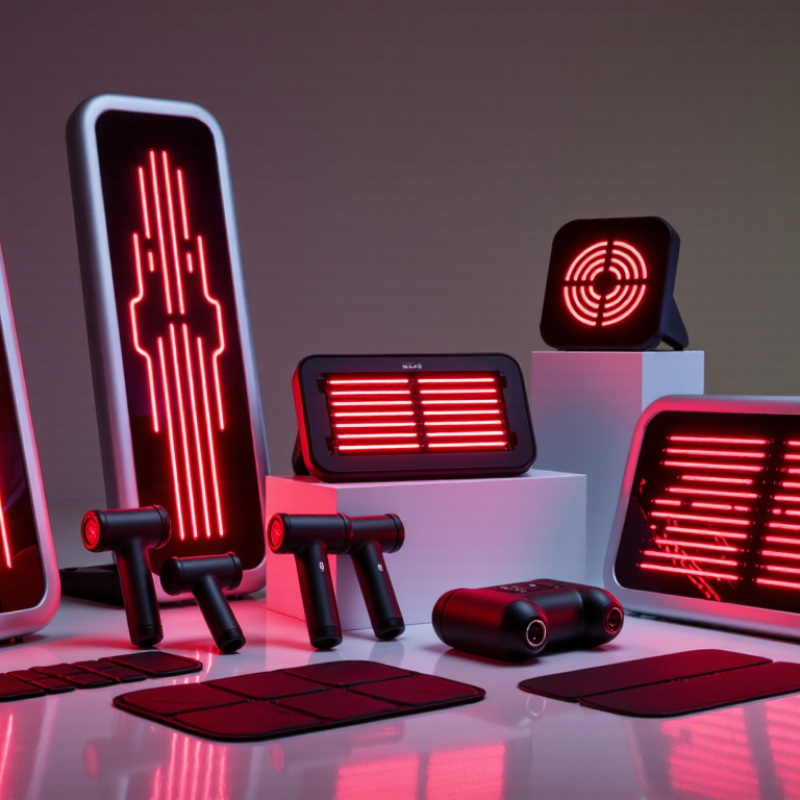
Product types include large panels for broader body areas, face masks for hands-free use, handheld units for smaller spots, and flexible wraps for areas such as a knee or shoulder. Check the stated wavelength, treatment area, recommended distance, and timer rather than relying on bright-looking LEDs. The category is less tidy than labels suggest: similar devices may deliver different amounts of light. That deserves scrutiny. Manufacturers should provide clear specifications and realistic guidance, not just polished claims.

Who Is the Top Red Light Therapy Manufacturer in China? - Red Light Therapy: Technology, Uses, and Product Types

Dimension Typical technology or product detail Common use or relevance What to verify
Red-light wavelength Many devices use red light in approximately the 630–660 nm range. Used in products designed for skin-focused photobiomodulation; outcomes depend on the device and use protocol. Check the stated wavelength and whether it is supported by a test report for the finished device.
Near-infrared wavelength Many devices use near-infrared light in approximately the 810–850 nm range; it is not visible to the eye. Often included in products intended to deliver light to deeper tissue than visible red light. It is not a guarantee of a particular clinical result. Confirm the wavelength, output measurement method, and eye-safety instructions.
Large treatment panels Stationary LED panels may combine red and near-infrared LEDs and cover a larger area than handheld devices. Designed for treatment of broader body areas at home or in professional settings. Review irradiance at a stated distance, illuminated area, timer controls, cooling, and electrical safety documentation.
Handheld devices Compact LED units are intended for localized application. Portable format for small areas; treatment coverage is typically more limited than with a panel. Check contact or recommended operating distance, treatment time, battery or power specifications, and warranty terms.
Wearable masks and wraps Flexible or shaped devices position LEDs near a targeted body area. Masks are commonly designed for facial use; wraps are designed for areas such as joints or limbs. Assess fit, material safety, cleaning instructions, light uniformity, and protection against unintended exposure.
Light dose and irradiance Irradiance is commonly expressed in mW/cm²; dose is commonly expressed in J/cm². Values depend on measurement distance and method. Useful for comparing stated output and following a product’s recommended session protocol. Look for independent or traceable measurements at a specified distance, not an unqualified output claim.
Evidence and intended use Photobiomodulation research covers different wavelengths, doses, devices, and conditions; findings for one protocol do not automatically apply to another. Potential uses should be assessed condition by condition; a device should not be assumed to diagnose, treat, or cure disease. Check the intended-use statement, supporting evidence, and applicable regulatory status in the destination market.
Manufacturer assessment No single manufacturer can be identified as “top” from product category or marketing claims alone. A meaningful comparison considers verified performance, quality controls, product suitability, and after-sales support. Request device test reports, quality-system documentation, relevant market certificates, traceability details, warranty terms, and clear safety guidance.

Note: Wavelength ranges and product formats above are common examples, not universal specifications. Follow the device instructions and consult a qualified healthcare professional when appropriate.

China’s Red Light Therapy Manufacturing Landscape

China’s red light therapy manufacturing landscape includes component suppliers, assembly facilities, and engineering teams serving different product tiers. Factories may source LED chips, drivers, housings, and cooling parts separately, then integrate them into panels, handheld units, or flexible wraps. A dependable process starts with clear specifications: target wavelength, optical output, treatment distance, operating time, and heat limits. These details matter. A wavelength label alone cannot show how evenly light reaches the treatment area. Manufacturers should verify output with calibrated meters and check several points across the device. They should also test electrical safety, temperature rise, assembly consistency, and packaging durability.

The market’s strength is production flexibility, but supplier depth can make comparisons difficult. Two devices with similar-looking LEDs may differ in power stability, beam spread, or thermal control. Buyers can review test methods, batch records, and the exact measurement conditions behind performance figures. Ask whether prototypes are checked after extended operation; a brief bench test may miss heat-related changes. Documentation should identify key components and provide clear operating instructions. Not every supplier explains limitations well. That deserves scrutiny. A practical assessment combines sample testing, factory checks, and transparent communication. No certificate or polished factory photo can replace those steps. China’s manufacturing ecosystem offers scale and customization, yet quality still depends on disciplined engineering and repeatable checks.

Key Criteria for Evaluating Chinese Manufacturers

When evaluating a red light therapy manufacturer in China, look beyond product photos and sales claims. Ask for clear specifications, including wavelength, output measurements, treatment area, and recommended operating distance. Request test reports and check whether the measured values match the product documentation. A dependable supplier should explain how it controls production quality, from incoming components to final inspection. Details matter.

Tips: Request a sample and test it under consistent conditions. Ask how the manufacturer measures light output and checks unit-to-unit variation. Confirm that reports identify the tested model and date. Ask for written warranty terms and a realistic production lead time. Keep the answers on record.

Factory experience is useful, but it does not replace evidence. Review the supplier’s quality procedures, traceability records, and response to technical questions. For example, can staff explain what happens when a unit fails inspection? Can they provide replacement parts or troubleshooting support? A polished website alone proves little. I would also compare several suppliers, since one sample may not represent every production batch. No checklist guarantees a perfect partnership, and a few details can still be missed. That is why clear documentation, repeatable checks, and direct communication matter.

Leading Manufacturers and Their Areas of Expertise

China’s red light therapy manufacturers tend to specialize in different parts of the product chain. Some concentrate on LED panels, where wavelength selection, heat control, and even light distribution matter. Others focus on flexible wraps or handheld devices, which require careful attention to fit, wiring, and durability. There is no single strength that defines every factory.

For panel makers, ask how they verify output at a stated distance. A wavelength figure on a specification sheet is useful, but it does not show how evenly the light reaches the treatment area. Request test methods, production quality checks, and clear instructions for use. Small details count: a stable stand, readable controls, and a power cable that does not strain at the connector. The comparison is not perfectly tidy; product categories and testing methods can differ.

Manufacturers offering design and production services may be better suited to custom sizes or housings. Their expertise should include material selection, prototype revisions, and consistent assembly—not just a polished sample. Ask what changes between prototype and mass production, and how defects are tracked. Be cautious with broad performance claims. Independent measurements and transparent documentation provide a firmer basis for judging a supplier than promotional language alone.

Key Wavelength Bands for Evaluating Red Light Therapy Manufacturers in China

A technical reference for comparing device wavelength coverage—not a company ranking.

Red light therapy devices commonly use visible red and near-infrared wavelengths. Manufacturers may offer products covering one or both bands; wavelength coverage alone does not establish treatment effectiveness or product quality.

How to Identify the Right Manufacturer for Your Needs

Choosing a red light therapy manufacturer starts with your intended use, not a sales ranking. Define the device format, target users, expected order volume, and required support. Ask how the company handles design changes, production delays, and warranty requests. Clear answers matter. Vague promises do not. Request a sample before discussing a large order. Then inspect it.

Check whether product specifications are measurable and consistent. Ask for the stated wavelengths, irradiance at a defined distance, treatment area, and test method. Compare the figures with independent test reports when available. Confirm that electrical and temperature checks are documented, and ask how each production batch is inspected. A polished brochure cannot replace this evidence. Small details count, such as whether the manual explains setup and cleaning clearly.

Evaluate communication as carefully as hardware. A capable manufacturer should answer technical questions directly, share relevant quality documents, and explain what changes require a new sample or test. Ask for references or examples of similar projects, while respecting client confidentiality. One common mistake is choosing the lowest quote before checking what it excludes. Packaging, testing, and after-sales support can change the real cost. No checklist catches everything, so record open questions and resolve them before approving production.

Go to Top