

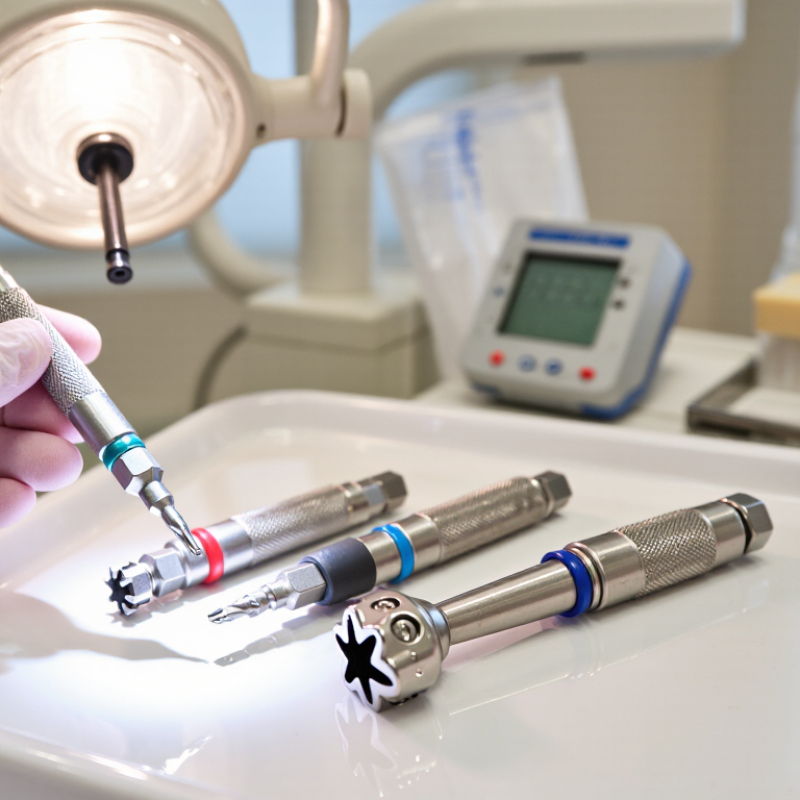
How to Choose Dental Implant Screwdrivers in 2026?
Selecting a dental implant screwdriver requires more than matching a driver to a screw head. In clinical practice, material choice affects control, cleaning, and service life. Hardened surgical stainless steel offers strength and resists repeated sterilization. Titanium can reduce weight, but it may show wear sooner under heavy torque.
Inspect the tip under magnification. Tiny rounding can damage engagement. I once underestimated this detail; the driver felt secure, yet the screw connection was less precise.
Torque control deserves measured attention. Choose a driver with a clearly calibrated scale or compatible torque-limiting mechanism. Confirm its range matches the procedure and the implant system’s documented requirements.
A smooth release helps prevent sudden over-tightening. Do not rely on hand feel alone. Gloves, fatigue, and limited access distort judgment. Calibration records matter, although busy clinics sometimes postpone them. That habit needs correction.
Ergonomics influences accuracy during small, repetitive movements. A textured handle should remain stable without excessive squeezing. The grip must fit different hand sizes and allow a straight wrist.
A short shaft improves access, while a longer shaft may improve visibility. Neither design wins in every mouth.
Test the driver with gloves before purchase. Check locking parts, markings, and cleaning instructions. Some tools look comfortable for five minutes, but create thumb pressure during a longer appointment.