Why You Should Choose a Digital Endoscope for Enhanced Diagnostics
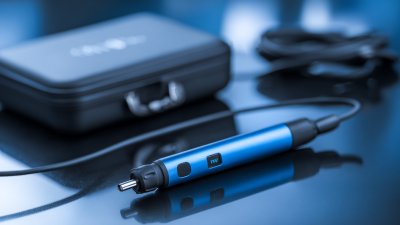
The evolution of medical technology has paved the way for innovative tools that significantly enhance diagnostic capabilities. Among these advancements, the Digital Endoscope stands out as a revolutionary device that transforms the way healthcare professionals visualize and assess internal conditions. Unlike traditional endoscopes, which often provide limited images and require extensive manual processing, a Digital Endoscope combines advanced imaging technology with user-friendly design, allowing for clearer and more detailed observations during medical examinations.

As we delve into the "Top 10" reasons why a Digital Endoscope should be your preferred choice for enhanced diagnostics, it becomes evident that this tool not only streamlines the diagnostic process but also improves patient outcomes. Its superior imaging techniques, real-time video transmission, and integration with digital platforms facilitate more accurate assessments, enabling healthcare providers to make informed decisions swiftly.
Embracing this cutting-edge technology signifies a commitment to delivering top-tier medical care and enhancing the overall efficiency of healthcare practices. In the following sections, we will explore how the unique features of the Digital Endoscope can elevate the standards of diagnostic procedures and offer a glimpse into the future of medical diagnostics.
The Advantages of Digital Endoscopes Over Traditional Models
Digital endoscopes offer significant advantages over traditional models, making them an optimal choice for enhanced diagnostics. One of the primary benefits is superior image quality. Unlike traditional endoscopes that often produce grainy images, digital endoscopes provide high-definition visuals that allow healthcare professionals to detect minute details during examinations. This clarity not only aids in accurate diagnoses but also helps in monitoring disease progression and evaluating treatment effectiveness.
Another key advantage is the integration of advanced technologies. Digital endoscopes frequently come equipped with features such as real-time video streaming and storage capabilities. This means that physicians can easily document procedures and share findings with colleagues for collaborative analysis. Additionally, digital systems often incorporate intelligent software that assists in identifying anomalies, further enhancing diagnostic accuracy. The ability to easily record and analyze data streamlines workflows and improves patient care, making digital endoscopes a vital tool in modern medical practice.
Why You Should Choose a Digital Endoscope for Enhanced Diagnostics
| Feature |
Digital Endoscope |
Traditional Endoscope |
| Image Quality |
High-definition images |
Standard-resolution images |
| Portability |
Lightweight and compact |
Generally heavier |
| Data Storage |
Digital storage options available |
Limited physical storage |
| Ease of Use |
User-friendly interface |
Complex setup |
| Cost Efficiency |
Lower long-term costs |
Higher maintenance costs |
| Flexibility |
Versatile application options |
Limited applications |
Enhanced Image Quality and Its Impact on Diagnostics Accuracy
Digital endoscopes have revolutionized the field of diagnostics, and their enhanced image quality plays a crucial role in improving diagnostic accuracy. According to a report from the World Health Organization, inaccuracies in visual diagnostics can lead to misdiagnosis rates of up to 30%. However, modern digital endoscopes offer high-definition imaging that significantly reduces these risks. A study published in the Journal of Gastroenterology found that clinics utilizing advanced digital endoscopy systems reported a 40% increase in the detection rates of gastrointestinal lesions compared to traditional methods.
The superior image quality provided by digital endoscopes allows for detailed visualization of internal structures, which is essential for accurate assessments. Research indicates that healthcare practitioners who employ high-resolution endoscopes, capable of depicting minute details, can enhance their diagnostic confidence. The American Society for Gastrointestinal Endoscopy (ASGE) states that the integration of digital imaging technologies can improve procedural outcomes, as they enable real-time analysis and better decision-making during examinations. This shift towards digital solutions not only enhances the quality of diagnostics but also fosters improved patient safety and treatment efficacy.
Time Efficiency: How Digital Endoscopes Speed Up the Diagnostic Process
Digital endoscopes have transformed the field of diagnostics, significantly enhancing time efficiency in clinical settings. According to a report by MarketsandMarkets, the digital endoscopy market is projected to grow at a compound annual growth rate (CAGR) of 6.6%, reaching $36.1 billion by 2026. This growth indicates a clear shift towards faster, more effective diagnostic tools that help healthcare providers minimize patient wait times and streamline procedures.
One of the groundbreaking advantages of digital endoscopes is their ability to provide real-time imaging and analysis. A study published in the Journal of Gastroenterology found that using digital endoscopes can reduce the time taken for procedures by up to 25%. This rapid feedback not only accelerates diagnosis but also allows for immediate decision-making regarding treatment options. Additionally, the integration of artificial intelligence in digital endoscopy facilitates quicker anomaly detection, further enhancing diagnostic efficiency. With these advancements, healthcare professionals can focus on delivering quality care while ensuring that patients receive timely intervention.
Cost-Effectiveness: Long-Term Savings with Digital Endoscopy Technology
Digital endoscopes have revolutionized the way we diagnose and monitor various medical conditions, providing significant long-term savings and cost-effectiveness over traditional options. According to a report by Grand View Research, the global digital endoscopy market is projected to reach USD 6.55 billion by 2025, driven by their increasing adoption in healthcare facilities. Digital endoscopy technology not only improves the accuracy of diagnoses but also reduces operational costs through minimized patient recovery times and lower complication rates. The integration of advanced imaging and enhanced visualization capabilities ensures that healthcare providers can make more informed decisions, ultimately leading to fewer unnecessary procedures.
**Tips:**
When considering a digital endoscope, it's essential to evaluate the total cost of ownership, including initial purchase price, maintenance, and potential for technology upgrades. Hospitals should look for models that offer a good warranty and support services to mitigate long-term costs.
Investing in digital endoscopy technology can also lead to improved patient satisfaction, as these tools often enable quicker diagnoses and treatments. A study published in the World Journal of Gastroenterology indicates that the use of digital endoscopy can decrease patients' average stay in healthcare facilities by up to 30%, which not only enhances patient comfort but also optimizes hospital resources.
Integration Potential: Compatibility with Advanced Medical Equipment and Software
The integration potential of digital endoscopes is a significant factor driving their adoption in modern medical diagnostics. These sophisticated devices are designed to enhance compatibility with advanced medical equipment and software, enabling healthcare providers to make more informed decisions. According to a report from MarketsandMarkets, the digital endoscope market is expected to reach $7.6 billion by 2025, with a CAGR of 6.6%. This growth is largely fueled by the increasing need for minimally invasive diagnostic procedures and the integration of digital systems in healthcare settings.
Digital endoscopes are designed to seamlessly interface with various imaging systems and electronic medical records (EMR). This compatibility allows for real-time data sharing and analysis, improving the efficiency of patient diagnostics. A study published in the Journal of Medical Systems highlighted that integrating digital endoscopes with software can enhance diagnostic accuracy by up to 40%. This integration not only streamlines workflow but also enhances patient outcomes through timely and precise interventions, making digital endoscopes an invaluable asset in the evolving landscape of medical technology.