

China Top 10 Bluetooth Endoscope Manufacturers For Global Buyers
For global buyers, choosing a Bluetooth Endoscope is rarely just a matter of price. Image clarity, wireless stability, probe length, and cable durability can shape everyday inspection work. A technician may guide a flexible camera through a narrow pipe while watching the live feed on a phone or tablet. Small differences matter.
This guide introduces ten manufacturers for buyers comparing products and suppliers. It is a starting point, not a guarantee that any one company will suit every job. Product ranges can differ in camera diameter, focal distance, lighting, waterproofing, app support, and customization options. Check these details against your inspection conditions, not just catalog photos. Bright LEDs can help in dark spaces, but glare may obscure cracks on reflective surfaces. A longer probe offers more reach, yet can be harder to steer. Real trade-offs.
When assessing a supplier, consider product documentation, quality-control practices, production capacity, warranty terms, and communication. Ask for current specifications and, where practical, test a sample in conditions similar to your own. Check phone compatibility, connection stability, image quality, battery life, and how easily the probe bends around obstacles. Bluetooth performance can vary with the device and surroundings, so a claim on a product page may not tell the whole story. Verify before ordering. Comparing these practical points can help buyers build a more reliable shortlist and ask manufacturers clearer questions. Some details may still be difficult to confirm until a device is tested; that uncertainty deserves attention.
What Bluetooth Endoscopes Are and How They Work
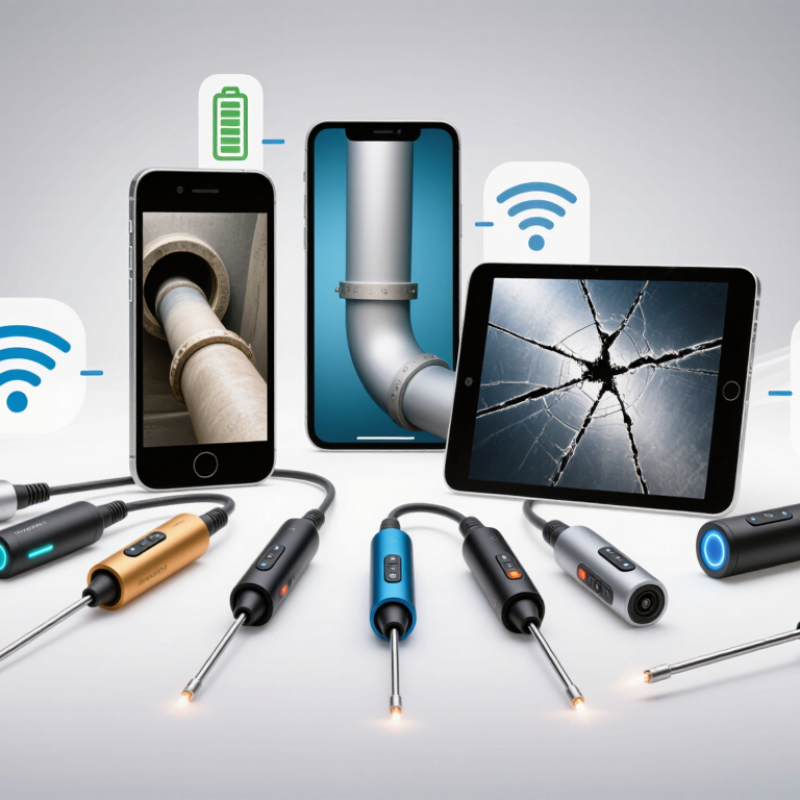
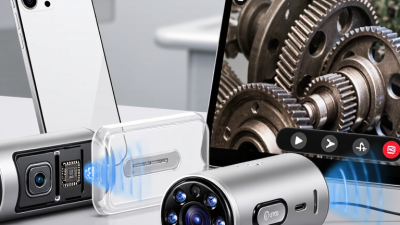
A Bluetooth endoscope is a compact inspection camera connected to a flexible, narrow probe. A small lens and LED lights sit at its tip. The probe can pass into tight spaces, such as a pipe bend or the gap behind an appliance. Its camera captures close-up images of surfaces that are difficult to see directly.
Here’s the key detail. Bluetooth may handle pairing or basic controls, while some models use Wi-Fi to send live video. Bluetooth’s limited data capacity can make high-resolution video slower or less stable. The exact setup varies, so check the device specifications rather than relying on its label. Once connected, an app typically displays the camera feed and may let users save photos or recordings. A bright reflection on wet metal can wash out detail; dim lighting can hide scratches. The image is useful, but not perfect. Small probes also have limited focus and viewing angles, so repositioning the tip may be necessary before drawing conclusions about what is visible.
China Top 10 Bluetooth Endoscope Manufacturers For Global Buyers - What Bluetooth Endoscopes Are and How They Work
Manufacturer-neutral buyer guide: the entries below are product and supplier evaluation criteria, not a ranked list of companies. No company or brand names are included. Specifications vary by model; confirm them with the supplier.
| No. | Evaluation dimension | How it works or common options | What global buyers should verify |
|---|---|---|---|
| 1 | Wireless connection | The camera captures images at the probe tip and sends them to a viewing device. Many phone-connected inspection cameras use Wi-Fi for live video; Bluetooth may be used for pairing or control. The connection method is model-specific. | Ask whether video uses Bluetooth, Wi-Fi, or a separate receiver, and check supported phones, operating systems, connection range, and app requirements. |
| 2 | Probe diameter | The camera and lighting are housed at the end of a flexible or semi-rigid probe. Smaller diameters can access narrower openings, while the opening must still accommodate the probe and its tip. | Confirm the measured outer diameter, including the camera head, and compare it with the smallest access opening in the intended application. |
| 3 | Probe length and flexibility | Probe length determines how far the camera can reach. Flexible probes can follow curved routes, while semi-rigid designs can hold a bent shape more readily; neither design suits every inspection path. | Check usable length, minimum bend radius if specified, pushability, and whether the probe is suitable for the planned route. |
| 4 | Image resolution | The sensor converts light into a digital image. A higher stated pixel count can provide more image detail, but lighting, focus, lens quality, transmission, and display size also affect what users can see. | Distinguish sensor resolution from recorded or streamed resolution, and request sample images or video from the actual model. |
| 5 | Lighting and brightness control | Small LEDs near the camera illuminate dark spaces. Adjustable brightness can help users adapt to different surfaces and distances, although reflective surfaces may still produce glare. | Check the number and control method of the lights, brightness adjustment, and image performance in the intended environment. |
| 6 | Focus and field of view | A lens focuses the scene onto the sensor. Fixed-focus cameras have a usable focus range; a wider field of view shows more of the surroundings but may make details appear smaller. | Request the focus range and field-of-view specification, and test at the working distance expected during inspection. |
| 7 | Water and dust protection | An IP rating describes protection against solids and water under defined test conditions. The rating applies only to the specified device or component and does not by itself establish chemical, pressure, or temperature resistance. | Check the exact IP rating, which parts it covers, and whether the rating applies to the complete probe assembly and its connectors. |
| 8 | Battery and operating time | A rechargeable battery powers the camera and wireless electronics. Actual runtime depends on factors such as brightness, wireless use, battery condition, and operating temperature. | Request the rated runtime and charging method, and clarify the conditions used for any runtime claim. |
| 9 | Image storage and sharing | Depending on the model and app, still images or video may be saved to a phone, tablet, memory card, or other storage. Wireless viewing does not necessarily mean that files are stored automatically. | Confirm file formats, storage location, recording capability, export options, and whether the app requires an account or internet access. |
| 10 | Application, compliance, and support | Industrial inspection cameras and medical endoscopes are designed for different uses. A consumer or industrial inspection device should not be assumed to be suitable for medical use; regulatory requirements depend on the product and destination market. | Define the intended use, request applicable test reports and market-specific documentation, and check warranty, spare parts, manuals, and after-sales support. |
Related Posts
-
How to Choose the Best Video Endoscope?
-
7 Compelling Benefits to Choose Hd Endoscope Camera for Your Business Needs
-

Unlocking the Future of Medical Imaging with Hd Endoscope Camera Innovations and Insights
-
Hd Endoscope Camera Features Benefits and Uses Explained?
-
What Is a Wireless Endoscope Camera and How Does It Work?
-
How to Choose China Top Borescope Endoscope Manufacturers?