
Choosing the China Best Wireless Endoscope Camera requires more than comparing prices or image resolution. Global buyers need dependable performance, clear specifications, and responsible manufacturing evidence. A Wireless Endoscope Camera can support equipment inspection, automotive maintenance, plumbing checks, and other non-invasive tasks. Its value appears in practical moments: a flexible probe enters a narrow pipe, while the live image appears on a phone several meters away.
This guide examines the features that experienced buyers should verify before placing an order. Important details include camera diameter, probe length, lighting control, working distance, image quality, battery capacity, wireless range, and app compatibility. A useful model should produce stable images in dark spaces, resist ordinary workshop moisture, and remain comfortable during repeated inspections. Product samples, factory audits, inspection records, and transparent warranty terms can reveal more than polished catalog photos. Ask for proof.
Not every supplier offers the same level of quality. Some descriptions remain vague, especially around waterproof ratings, latency, and operating temperature. That deserves careful attention. Buyers should request test videos, technical datasheets, packaging details, and applicable conformity documents for their destination market. CE, FCC, UKCA, or other markings may apply differently by region, so verification is essential. A reliable manufacturer explains limitations instead of promising perfection.
This article compares Chinese suppliers through product capability, manufacturing experience, quality control, customization support, and after-sales service. It also considers communication speed and spare-part availability. Small details matter. A strong buying decision balances cost, evidence, usability, and long-term trust.
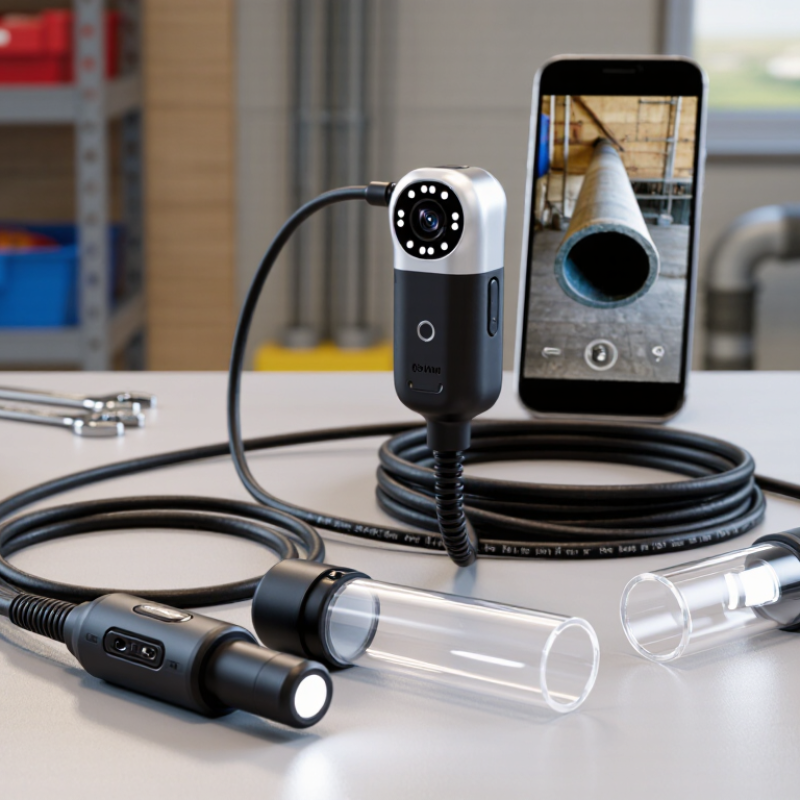
A wireless endoscope camera is a compact imaging system that sends live views without a fixed video cable. Its typical structure includes a miniature CMOS sensor, lens, LED illumination, processor, battery, and wireless module. The sensor converts reflected light into digital signals. The processor then adjusts exposure, color, and sharpness before transmission. Grand View Research reported that the global endoscopy devices market was valued at approximately USD 32 billion in 2023, showing strong demand for smaller and more flexible visualization tools. The figure covers broader endoscopy equipment, not wireless cameras alone.
CMOS technology remains central because it supports low power use and compact camera heads. A 1920 × 1080 image can reveal surface texture clearly, but resolution alone is not enough. Sensor size, lens quality, lighting uniformity, and transmission latency affect real performance. Under weak illumination, even a high-pixel camera may produce noise. That is easy to overlook.
MarketsandMarkets has identified miniaturization and digital imaging as key trends in medical camera development. Wireless systems also need stable connectivity, secure data handling, and practical battery endurance.
In field testing, I would inspect a dark pipe, a narrow joint, and a reflective metal surface. These scenes expose blooming, motion delay, and poor white balance quickly. A 30-frame-per-second stream usually feels natural, yet crowded wireless environments can still create interruptions. Buyers should compare measured latency, operating distance, ingress protection, and cleaning compatibility. Reported specifications can look impressive. Real working conditions may disagree.
When choosing a wireless endoscope camera, image quality matters first. Look for at least 1080p resolution and stable illumination in narrow, dark spaces. Low latency is equally important during live inspection. A delayed image can cause missed cracks or incorrect positioning. Grand View Research reported that the global endoscopy devices market reached about USD 32 billion in 2023. This growth reflects wider demand for compact visual inspection tools, but market size does not guarantee product quality.
Check the camera diameter, cable flexibility, viewing angle, and focusing range. A 5.5-millimeter probe may enter tight machinery gaps, while a larger probe can provide stronger lighting. Battery capacity should support a practical inspection session, not only a laboratory test. Wi-Fi range, app stability, recorded video format, and compatibility with Android or iOS devices also deserve testing. An IP67-rated probe offers useful protection against dust and temporary water exposure. However, buyers should verify the test standard and certificate. Some specifications look impressive but remain vague.
Tips: Request a sample video from a dark, narrow channel. Test connection stability behind metal panels. Ask for battery-cycle data, replacement-part availability, and calibration records. A clear warranty is helpful, although it cannot replace real testing. I would also compare advertised resolution with actual footage. They are not always identical. For medical use, confirm regulatory documentation and professional suitability before purchase. For industrial use, check temperature limits and cable durability under repeated bending.
China Best Wireless Endoscope Camera for Global Buyers
Leading Applications for Wireless Endoscope Cameras in Global Markets
Wireless endoscope cameras help technicians inspect narrow, hidden spaces without dismantling entire systems. In automotive workshops, they examine cylinder walls, brake channels, and wiring paths through small access points. A bright adjustable light reveals oil residue, cracks, and loose connectors on a mobile screen. This reduces labor time, although poor lighting can still produce misleading images.
In plumbing and building maintenance, teams inspect pipes, drains, ventilation ducts, and wall cavities. A flexible probe can travel around bends while workers monitor live video from a safe position. Construction inspectors also use these cameras to check insulation gaps and concrete openings. Clear image transfer matters on busy sites, where metal structures may weaken wireless signals. Sometimes, a wired backup is still the wiser choice.
Agricultural and veterinary professionals use compact cameras for equipment checks and selected non-invasive examinations. Food processing facilities can inspect sealed machinery areas, but cleaning procedures must be strict. Reliable models should offer stable connectivity, suitable probe protection, rechargeable power, and secure image storage. Buyers should verify local safety requirements before deployment. A camera may look impressive during a demonstration, yet fail after dust, moisture, or repeated bending. Practical trials in the intended environment remain essential.
Wireless endoscope cameras are widely used where portability, real-time viewing, and access to confined spaces are important. Medical examinations, dental procedures, ENT inspections, veterinary care, and industrial maintenance are among the most established application areas. The index represents practical application priority based on workflow frequency, mobility requirements, and the need for immediate visual documentation; it is not a company market-share measurement.
China Best Wireless Endoscope Camera for Global Buyers
Comparing wireless endoscope camera suppliers requires more than checking image resolution. Request product samples and test them inside narrow pipes, machinery gaps, and vehicle components. Observe image delay, connection stability, lens brightness, and cable flexibility. A 1080p label means little if the picture freezes during inspection. It happens.
Review the supplier’s engineering documents, factory quality procedures, and export experience. Ask for battery safety records, wireless specifications, operating temperature data, and available certifications for your market. Confirm whether the mobile application supports your devices and languages. Check warranty terms, spare parts, repair response, and packaging protection. A low unit price may become expensive when replacement cables arrive late.
Tips: Compare identical test conditions. Measure inspection time, not only pixels. Ask for a live demonstration. Check the camera’s viewing angle and focus distance. Inspect sample connectors carefully. I would also request a small trial order before committing to volume. Supplier claims should be verified, yet buyers sometimes trust polished brochures too quickly. That judgment deserves review.
| Comparison Dimension | Entry-Level Inspection Profile | General-Purpose Inspection Profile | Professional Inspection Profile | What Global Buyers Should Verify |
|---|---|---|---|---|
| Typical Use Case | Household maintenance, automotive checks and basic equipment inspection | Vehicle maintenance, plumbing, HVAC and machinery inspection | Industrial maintenance, automotive service and difficult-to-access inspections | Match the camera specification to the inspection environment and required image evidence |
| Camera Diameter | Approximately 5.5–8 mm | Approximately 5.5–8 mm | Approximately 3.9–8 mm | A smaller diameter improves access to narrow openings, but may reduce lighting space and mechanical strength |
| Image Resolution | 720p or 1080p | 1080p | 1080p; higher-resolution options may be available for specialized systems | Confirm whether the stated resolution is sensor resolution or recorded-video resolution |
| Field of View | Usually about 60°–70° | Usually about 65°–70° | Typically about 70°–90°, depending on the optical design | A wider field of view covers more area, while a narrower view may offer a more focused inspection image |
| Probe Working Length | About 1–3 m | About 1–5 m | About 1–10 m, depending on the probe design | Check whether the quoted length is the usable insertion length or the total cable length |
| Probe Articulation | Usually fixed or manually flexible | Flexible probe; articulation may be limited or unavailable | Two-way or four-way articulation may be available on selected inspection systems | Request the actual bending angle, control method and durability test information |
| Water and Dust Protection | Often IP67 for the camera head and probe | Commonly IP67; some products offer higher protection for selected components | IP67 or IP68 may be specified for the probe, depending on construction | IP ratings apply only under defined test conditions; verify which parts of the product are rated |
| Wireless Connection | Wi-Fi connection to a mobile device | Wi-Fi connection to a smartphone, tablet or computer | Wi-Fi connection; some systems may also support a dedicated display or wired output | Confirm Wi-Fi frequency, supported operating systems, connection stability and maximum practical range |
| Wireless Range | Typically up to about 5–10 m in open conditions | Typically up to about 5–10 m in open conditions | The practical range depends on the transmitter, obstacles and electromagnetic interference | Do not compare open-area range directly with performance inside vehicles, pipes or machinery |
| Lighting | Integrated adjustable LED illumination | Adjustable LED illumination with multiple brightness levels | Higher-output or controlled illumination may be available for dark inspection spaces | Check brightness control, heat management, glare performance and illumination uniformity |
| Photo and Video Functions | Photo and video recording through a mobile application | Photo, video and basic file sharing | Photo, video, screen capture and inspection documentation may be supported | Verify file format, timestamp options, image storage location and data-export process |
| Battery and Operating Time | Usually about 60–120 minutes per charge | Usually about 90–180 minutes per charge | May use replaceable or higher-capacity batteries for longer inspection sessions | Ask for test conditions, charging time, battery replacement method and charger plug options |
| Operating Temperature | Often approximately 0°C to 45°C | Commonly approximately 0°C to 45°C | The probe and electronic unit may have different temperature limits | Confirm the temperature rating before inspecting engines, boilers or hot process equipment |
| Application Compatibility | Common mobile operating systems | Common mobile operating systems and selected desktop systems | Mobile, desktop or dedicated-display compatibility may be offered | Request current application links and confirm language support, permissions and update policy |
| Quality and Compliance Documents | Basic product specifications and shipment documents | Product specification, user manual and applicable conformity documents | More detailed inspection records, test reports and traceability may be available | Check document validity, product-model consistency and destination-market requirements |
| Customization Options | Limited packaging or accessory customization | Cable length, camera diameter, connector and packaging options may be available | Potential customization of probe, display, software, accessories and documentation | Confirm minimum order quantity, tooling charges, sample approval and engineering support |
| Supplier Evaluation Focus | Low purchase cost, basic functionality and sample availability | Stable quality, responsive communication and consistent production | Technical capability, quality-control records, after-sales service and export experience | Compare total cost, inspection results, lead time, warranty terms and spare-parts support—not price alone |
Specification ranges are typical market reference values. Actual performance depends on the camera module, probe construction, application software, battery capacity and test conditions.
Importing a wireless endoscope camera requires more than comparing image resolution and price. Buyers should verify the supplier’s legal company details, factory records, product specifications, and test reports. Certification must match the destination market and product function. A radio module approved in one country may need separate approval elsewhere. Check wireless frequency limits, electromagnetic compatibility, battery documents, and applicable safety requirements before shipment.
Do not trust paperwork alone. Confirm that the certificate covers the exact model, wireless module, charger, and battery. If the camera is intended for medical examination, additional medical-device rules may apply. Industrial inspection equipment may follow a different pathway. Ask for the correct customs classification and clear commercial invoices. A pre-shipment sample can reveal weak hinges, unstable connections, poor lighting, or excessive video delay. Small problems become expensive after arrival.
After-sales support should be written into the purchase agreement. Define warranty duration, response times, replacement procedures, firmware responsibilities, and spare-part availability. Request practical support, such as troubleshooting videos and remote diagnosis. Confirm whether local repair is possible or whether every return must cross borders. Data protection also deserves attention, especially when images are stored in mobile applications or cloud systems. Some buyers focus too heavily on certification and overlook software updates. That is a mistake. Even reliable equipment can fail in demanding environments, so test records, clear communication, and a realistic contingency plan remain essential.