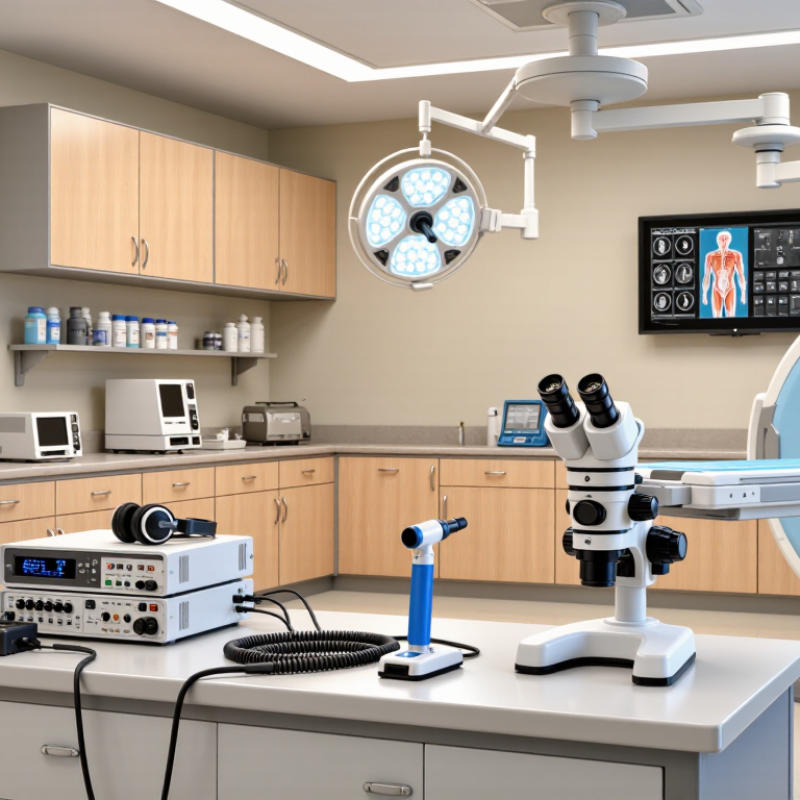
What Are the Best Ent Medical Equipment Types in 2026? The answer depends on clinical purpose, patient age, workflow, and diagnostic accuracy. Modern ENT departments increasingly combine flexible endoscopes, digital otoscopes, audiology systems, surgical microscopes, suction units, and image-guided navigation. Each tool has a distinct role. None is universally best.
Dr. Eric M. Genden, a recognized otolaryngology surgeon and academic leader, offers a practical guiding principle: “The right device is the one that improves precision, safety, and patient care.” That idea matters in 2026. A high-resolution nasal endoscope can reveal subtle mucosal changes. A calibrated audiometer can clarify hearing loss more reliably. A surgical microscope can illuminate tiny structures during delicate procedures. These details influence decisions.
However, advanced features do not guarantee better outcomes. A device may have impressive software, yet require difficult maintenance or costly consumables. Staff training also matters. Even excellent equipment can underperform in unfamiliar hands. That is easy to overlook.
This guide examines the leading Ent Medical Equipment types used for examination, diagnosis, treatment, and surgical support. It considers image quality, ergonomics, infection-control design, connectivity, durability, and total ownership cost. It also recognizes a practical limitation: specifications can look perfect on paper, while daily clinical use reveals weaknesses. Buyers should compare verified performance data, service support, warranty terms, and user feedback before purchasing. The best choice is rarely the newest model alone. It is the equipment that works consistently, supports sound clinical judgment, and protects patient comfort.
ENT medical equipment includes tools for examination, diagnosis, treatment, and patient monitoring. Classification matters because each device supports a different clinical decision.
Examination equipment includes otoscopes, rhinoscopes, laryngoscopes, and endoscopic imaging systems. These tools help clinicians inspect the ear canal, nasal passages, throat, and vocal cords.
Diagnostic equipment covers audiometers, tympanometers, vestibular testing systems, and imaging equipment.
Treatment equipment includes suction units, electrosurgical systems, sinus dilation tools, and operating microscopes. Patient monitoring devices may track oxygen saturation, blood pressure, and respiration during procedures. Sterilization systems and examination chairs are also essential, although they are often overlooked.
The World Health Organization reports that more than 1.5 billion people live with hearing loss. This figure may reach 2.5 billion by 2050. Market research from Fortune Business Insights also projects continued growth in the global ENT devices market through the next decade.
Tips: Match equipment with clinical workload, staff training, room size, and maintenance access. A compact endoscope may suit a small clinic, while a hospital needs advanced imaging and surgical support. Check calibration records. Test connectivity before purchase. Small failures matter.
The “best” equipment is not always the newest. A reliable tympanometer can be more useful than an expensive system used rarely.
I have seen procurement plans focus on features, while ignoring cleaning time and replacement parts. That is a weakness worth reviewing.
Evaluation should include accuracy, ergonomics, infection-control requirements, warranty terms, and local service capacity.
Diagnostic ENT equipment must make small anatomical details visible without complicating the examination. A modern otoscope remains essential for viewing the ear canal and tympanic membrane. Video otoscopes add image capture, allowing clinicians to compare findings over time. Tympanometers measure middle-ear pressure and mobility. They can reveal fluid or eustachian tube dysfunction that a visual examination may miss.
Hearing assessment also requires calibrated pure-tone audiometers and speech testing systems.
The World Health Organization’s World Report on Hearing estimates that more than 1.5 billion people live with hearing loss worldwide. By 2050, this number may exceed 2.5 billion.
That scale increases the need for accessible, reliable screening equipment. Yet screening is not diagnosis. A quiet room, trained operator, and patient cooperation still matter.
For the nose and throat, flexible nasal endoscopes and laryngoscopes provide close views of mucosal surfaces, vocal folds, and obstructed passages. Good illumination is critical. Image clarity helps, but it can also create false confidence. A perfectly sharp image may still be interpreted incorrectly. Infection-control design, easy cleaning, recording capability, and regular calibration should guide purchasing decisions. WHO’s 2023 Global Report on Infection Prevention and Control also highlights the importance of safer clinical procedures. Equipment selection is therefore not only about advanced features. It is about dependable examination, careful interpretation, and knowing when the device is not enough.
What Are the Best ENT Medical Equipment Types in 2026?
Modern ENT care depends on accurate diagnosis before treatment. High-resolution otoscopes and operating microscopes reveal subtle ear-canal and tympanic-membrane changes. Audiometers and tympanometers measure hearing thresholds, middle-ear pressure, and membrane mobility. Nasal endoscopes and flexible laryngoscopes help clinicians inspect narrow passages with less patient discomfort. The WHO World Report on Hearing estimates that over 1.5 billion people live with hearing loss worldwide. This makes accessible diagnostic equipment increasingly important.
Treatment and surgical equipment now includes endoscopic sinus instruments, suction-irrigation systems, electrosurgical units, and powered microdebriders. Image-guided navigation can support complex sinus or skull-base procedures, especially when anatomy is distorted. Surgical microscopes remain valuable during delicate ear operations. Reliable anesthesia monitoring and sterilization systems are equally essential. They receive less attention, but failures there can affect safety quickly. The WHO also projects that nearly 2.5 billion people may have hearing loss by 2050. Equipment planning should therefore include rehabilitation tools, not only operating-room devices.
Tips: Match every device to clinical volume, staff training, and maintenance capacity. A newer system is not automatically better. I would question any purchase based only on sharper images or impressive automation. Check validated accuracy, cleaning requirements, service access, and total ownership cost. Review guidance from the WHO, professional ENT societies, and national regulators before procurement. Even excellent equipment can underperform when staff training is rushed.
What Are the Best ENT Medical Equipment Types in 2026?
Patient monitoring deserves equal attention. In ENT procedures, airway swelling, bleeding, sedation, and positioning can change quickly. A reliable setup should include pulse oximetry, non-invasive blood pressure, ECG, respiratory rate, temperature, and capnography when sedation affects ventilation. Capnography is especially valuable because oxygen saturation may remain normal while ventilation declines. That delay can mislead a busy team.
The World Health Organization’s Global Patient Safety Report 2024 states that about one in ten patients experience harm in healthcare. It also reports that more than half of this harm is preventable. These figures make continuous observation more than a technical preference. They support practical safety controls, including audible alarms, visible trend displays, backup power, and clearly marked emergency oxygen access. Alarm limits must fit the patient, not simply follow default settings.
Safety equipment should match the procedure. Pediatric ENT cases need appropriately sized sensors and cuffs. Operating rooms should keep suction, airway devices, oxygen delivery systems, and resuscitation equipment immediately reachable. In real practice, clutter can hide essential tools. That is easy to underestimate. Staff also need repeated training in alarm response and equipment checks. The Joint Commission has long identified alarm management as a patient-safety concern, yet alarm fatigue remains possible. Monitoring helps, but it cannot replace attentive clinicians, clear escalation rules, and honest review after near misses.
Choosing the best ENT equipment in 2026 starts with the clinical question, not the catalog. An outpatient clinic may need flexible endoscopes, digital otoscopes, and compact suction systems. A surgical department may require operating microscopes, rigid endoscopes, and advanced visualization tools. Match each device to patient volume, procedure complexity, room size, and staff expertise.
Check image quality under real conditions. Ask whether the scope shows fine mucosal changes under uneven lighting. Review cleaning requirements, sterilization compatibility, and replacement costs before purchase. Audiology services also need calibrated audiometers, tympanometers, and quiet testing rooms. Equipment should support accurate records and simple data transfer without creating extra administrative work.
Clinical evidence and local safety requirements should guide the final decision. Request demonstrations with training staff, not only sales representatives. Test controls while wearing gloves and examine the screen from the usual working position. A reliable service plan matters, especially when a single failed device can delay a full clinic list. Keep maintenance logs and verify calibration at scheduled intervals.
My own preference is not always correct. A feature-rich system may overwhelm a small team. A cheaper device may produce hidden costs through fragile accessories or slow repairs. Ask clinicians, nurses, technicians, and infection-control staff to score each option separately. Their disagreements often reveal the most important practical weakness.
| ENT Equipment Type | Primary Clinical Use | Key Measurements or Outputs | Best-Fit Clinical Needs | Main Advantages | Important Limitations | Selection Criteria for 2026 | Priority |
|---|---|---|---|---|---|---|---|
| Standard Otoscope | Basic examination of the external ear canal and tympanic membrane. | Direct visual assessment of ear canal condition, cerumen, inflammation, perforation, and visible middle-ear changes. | Primary care, pediatric screening, urgent care, routine ENT examination, and mobile clinics. | Portable, fast to use, relatively affordable, and suitable for high-volume examinations. | Limited field of view and documentation capability; findings depend heavily on examination technique. | Choose adequate illumination, reliable magnification, interchangeable specula, ergonomic handling, and easy cleaning. | Essential |
| Video Otoscope | Magnified digital examination and recording of the ear canal and tympanic membrane. | Still images or video, enlarged visualization, and digital examination records. | Tele-ENT, pediatric care, follow-up monitoring, patient education, and multidisciplinary consultation. | Improves documentation and communication; useful for comparing findings over time. | Requires a display or compatible digital system; image quality can be affected by cerumen, moisture, or poor positioning. | Evaluate image resolution, illumination, field of view, data export, infection-control design, and compatibility with clinical records. | High |
| Diagnostic Audiometer | Measurement of hearing thresholds across selected frequencies. | Air-conduction and bone-conduction thresholds, pure-tone averages, and hearing-level results in decibels hearing level. | Hearing-loss diagnosis, occupational assessments, pediatric evaluation, rehabilitation planning, and ENT referral clinics. | Provides standardized behavioral hearing assessment and supports classification of hearing loss. | Requires a quiet or acoustically controlled environment and trained personnel; patient cooperation is important. | Check frequency range, output levels, masking capability, calibration compliance, speech-testing functions, and reporting software. | Essential |
| Tympanometer | Objective assessment of middle-ear mechanics and acoustic reflex pathways. | Tympanograms, ear-canal volume, middle-ear pressure, compliance, and optional acoustic reflex results. | Otitis media evaluation, Eustachian tube assessment, conductive hearing-loss workup, and pediatric screening. | Rapid, objective, and useful when behavioral responses are unreliable. | Results can be influenced by probe seal, ear-canal obstruction, perforation, ventilation tubes, and patient movement. | Select appropriate probe tones, automated screening modes, pediatric protocols, reflex testing, printer or digital export, and calibration support. | Essential |
| Otoacoustic Emissions System | Objective screening of cochlear outer-hair-cell function. | Transient-evoked or distortion-product otoacoustic emission responses across selected frequencies. | Newborn hearing screening, pediatric testing, ototoxicity monitoring, and patients unable to complete conventional audiometry. | Fast, non-invasive, and generally does not require an active behavioral response. | Results may be absent with middle-ear disease, excessive noise, poor probe fit, or significant hearing loss. | Prioritize automated protocols, probe-fit guidance, ambient-noise monitoring, age-specific norms, and secure result storage. | High |
| Auditory Brainstem Response System | Objective evaluation of neural auditory pathway responses. | Evoked-potential waveforms, latencies, amplitudes, and estimated hearing thresholds. | Newborn follow-up, difficult-to-test patients, retrocochlear evaluation, and neurodiagnostic assessment. | Useful when reliable behavioral responses cannot be obtained; supports objective threshold estimation. | Testing may take longer and requires careful electrode placement, low electrical noise, and specialized expertise. | Assess stimulus types, electrode channels, artifact rejection, automated algorithms, sedation workflow, and data-review functions. | Specialized |
| Nasal Endoscope | Visualization of the nasal cavity, turbinates, septum, nasopharynx, and sinus drainage pathways. | Endoscopic images or video for structural, inflammatory, infectious, and postoperative assessment. | Rhinosinusitis, nasal obstruction, epistaxis evaluation, allergy clinics, and postoperative follow-up. | Provides a direct view of areas that are difficult to examine with a nasal speculum. | May cause discomfort or bleeding; requires patient preparation, cleaning, and trained handling. | Consider rigid versus flexible design, diameter, viewing angle, image quality, light transmission, recording, and reprocessing requirements. | High |
| Flexible Nasopharyngoscope | Dynamic examination of the nasal passage, nasopharynx, hypopharynx, and laryngeal structures. | Real-time video of airway movement, vocal-fold motion, swallowing-related findings, and mucosal conditions. | Voice disorders, chronic cough, dysphagia assessment, pediatric airway evaluation, and office-based ENT diagnosis. | Provides access through anatomically curved passages and enables functional observation during phonation or breathing. | More delicate than rigid instruments and requires thorough cleaning or validated high-level disinfection procedures. | Review distal-tip articulation, insertion diameter, image quality, field of view, portability, recording, and reprocessing workflow. | High |
| Rigid Endoscope | Detailed examination of the nasal cavity, sinuses, and selected laryngeal structures. | High-quality optical images with defined viewing angles, commonly including zero-degree and angled views. | Sinus assessment, office procedures, surgical planning, postoperative review, and endoscopic documentation. | Excellent image clarity, durability, and compatibility with endoscopic instruments. | Less adaptable to curved anatomy and may be less comfortable for some patients than flexible examination. | Select appropriate diameter, viewing angle, optical quality, light compatibility, sterilization method, and camera integration. | High |
| ENT Operating Microscope | Magnified visualization during ear surgery and other microsurgical procedures. | Magnified stereoscopic view with adjustable focus, working distance, and illumination. | Tympanoplasty, mastoid surgery, ossicular procedures, foreign-body removal, and microsurgical training. | Provides depth perception, precision, and strong illumination for delicate anatomy. | High capital cost, larger footprint, and need for trained operating-room personnel and maintenance. | Evaluate optical magnification, working distance, illumination, balance, documentation, maneuverability, and operating-room integration. | Specialized |
| ENT Treatment Unit | Centralized support for examination, suction, irrigation, instrument storage, and minor procedures. | Integrated access to suction, air or water functions, illumination, and procedure accessories. | ENT outpatient rooms, multi-physician practices, procedure clinics, and high-throughput departments. | Improves room organization, workflow efficiency, and availability of frequently used instruments. | Requires space, installation planning, preventive maintenance, and appropriate cleaning procedures. | Assess modularity, suction performance, waste management, ergonomics, noise level, serviceability, and infection-control surfaces. | High |
| Medical Suction System | Removal of secretions, blood, irrigation fluid, and debris during ENT examinations and procedures. | Negative pressure and suction flow appropriate to the intended clinical procedure. | Ear cleaning, nasal procedures, airway management, minor surgery, and emergency ENT care. | Supports a clear field of view and helps maintain airway or procedural safety. | Improper pressure can cause tissue trauma; collection containers and tubing require consistent infection-control management. | Choose adjustable pressure, appropriate flow, overflow protection, noise control, disposable or reusable components, and alarm functions. | Essential |
| Electrosurgical or Cautery Unit | Hemostasis and tissue treatment during selected ENT procedures. | Controlled electrical or thermal energy delivered according to the selected mode and tissue application. | Epistaxis management, soft-tissue procedures, tonsillar or nasal procedures, and operative hemostasis. | Can provide efficient bleeding control and precise tissue treatment when correctly applied. | Requires trained operation, safety precautions, appropriate grounding or accessories, and careful control of thermal injury risk. | Consider available modes, power control, smoke evacuation, safety monitoring, compatible accessories, and local procedural protocols. | Specialized |
| Portable ENT Diagnostic Kit | Basic ear, nose, and throat examination outside a dedicated treatment room. | Direct visual assessment using interchangeable examination instruments and illumination. | Community outreach, rural clinics, bedside assessment, emergency response, and home-care services. | Portable, flexible, and useful where space, power supply, or infrastructure is limited. | Usually offers fewer advanced diagnostic functions than dedicated audiology or endoscopy systems. | Check battery life, charging options, instrument durability, lighting consistency, case design, sterilization, and replacement-part availability. | Medium |